Related articles

Text | New Entropy, Author | Zhizi Editor | Jiuli
NextFin News — When Midea turned its PortaSplit portable air conditioner into a European cult product—prompting consumers to drive hundreds of miles to buy secondhand units at twice the retail price—market observers heralded it as a milestone for premium Chinese manufacturing. With major brands like Midea and Haier pushing their overseas proprietary brand shares to between 40% and 90%, Chinese consumer electronics are undergoing a historic transformation from factory suppliers to global household names.
Yet, a quieter and far more aggressive flanking maneuver is unfolding across the tropics. Sidestepping direct, capital-intensive confrontations with industry giants in Europe and North America, a lean contingent of Chinese small appliance brands has pivoted south. Lacking heavy structural baggage, these agile players have turned extreme cost-efficiency, rapid iteration, and compact design into a formidable playbook, finding a massive growth engine in the heat and humidity of Southeast Asia.
Escaping Domestic Saturation: The Pivot South
The domestic boom of 2020—fueled by the pandemic』s "stay-at-home economy"—propelled trendy niche products like air fryers, sandwich makers, and high-speed blenders into the kitchens of young Chinese consumers. For single, urban renters, bulky and expensive traditional appliances made little financial sense. Lightweight, visually appealing, and highly portable devices under $50 became instant impulse purchases. Most of these brands emerged from regional manufacturing hubs as unbranded factories, bypassing traditional distribution networks to seize retail market share before industry conglomerates could react.
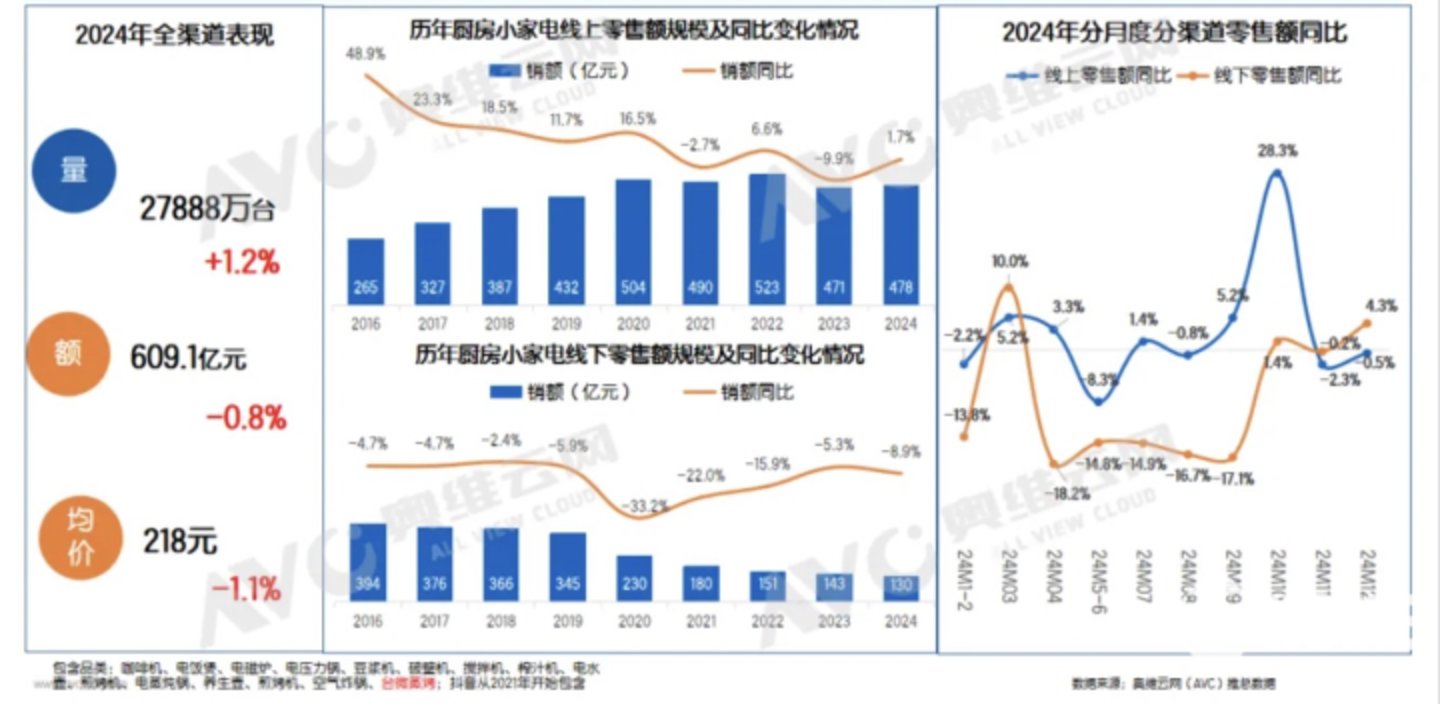
However, the domestic tide turned rapidly. By mid-2023, growth began to stall. Data from market research firm All View Cloud (AVC) underscores this reality: in 2024, Chinese small appliance retail volume reached roughly 279 million units—a flat year-on-year increase of just 0.3%—while total retail revenue fell 0.8% to 60.9 billion RMB. Sales volume crept upward, but prices dropped, signaling a destructive domestic price war.
Image/Aowei Cloud Network
Worse, the survival pressure on smaller players intensified as domestic conglomerates shifted from selling standalone hardware to deploying comprehensive digital ecosystems.
With Midea launching its MevoX self-evolving AI framework, Robam deepening its ROKI digital kitchen network, and Dreame』s sub-brand MOVA targeting whole-home smart integration, the competitive landscape moved beyond the product level. When conglomerates redefine the home through smart ecosystems, niche appliances lose their independence; data, power outlets, and user interfaces are either absorbed by a major platform or locked out entirely.
Simultaneously, unexpected cross-industry challengers entered the market. In late 2025, pop-culture and toy giant Pop Mart began recruiting small appliance professionals, launching IP-themed products like electric kettles, coffee makers, and limited-edition Labubu coolers by April 2026. When small appliances morph into lifestyle statements and emotional purchases tied to corporate ecosystems, standalone brands relying solely on aesthetics and baseline pricing find their margins obliterated.
While established players like Bear Appliance and Buydeem possess the brand equity to pivot domestically, undercapitalized mid-tier manufacturers have been forced to look abroad—escaping domestic saturation and avoiding direct confrontations in the West by targeting emerging markets in Southeast Asia.
Harvesting the Tropical Dividend: The New Frontier
This strategic migration has fueled the rapid rise of an agile Chinese appliance contingent across ASEAN markets.
The digital-native brand Gaabor, founded in September 2021, surpassed 230 million RMB in sales and 1.82 million units shipped in its first year alone. By logging annual sales of over one million air fryers, it secured the top spot in the small appliance category on Shopee and TikTok Shop across multiple Southeast Asian nations, scaling into a major player within four years.
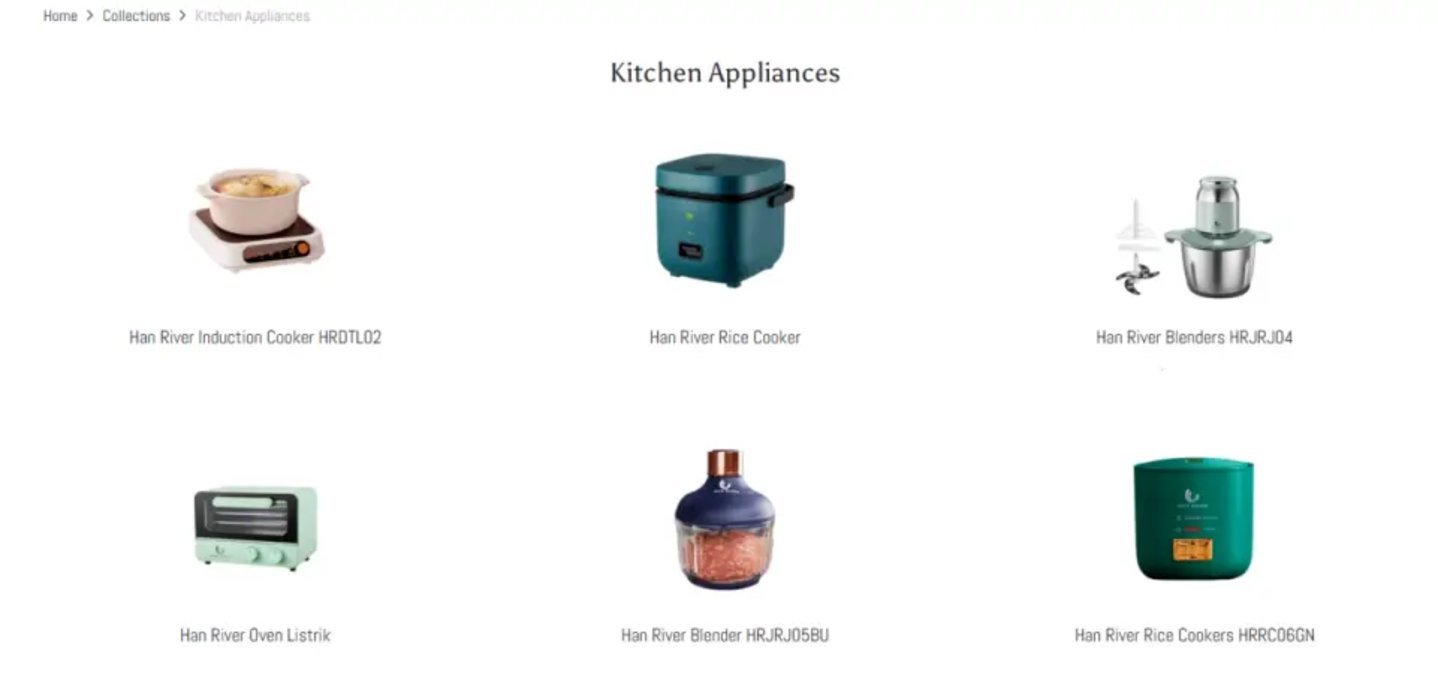
Similarly, Han River, originating from the manufacturing clusters of Chaoshan, Guangdong, established itself as a top-tier home appliance seller on Shopee Indonesia by 2020. By 2025, its annual revenue topped 150 million RMB, with single-product monthly sales frequently exceeding 20,000 units.

Image/Han River
Bear Appliance has seen comparable success by tailoring specialized electric steamers and slow cookers to Vietnamese culinary habits; its export revenue jumped 26.66% in 2024, securing the number-two market share for online air fryer sales in Vietnam.
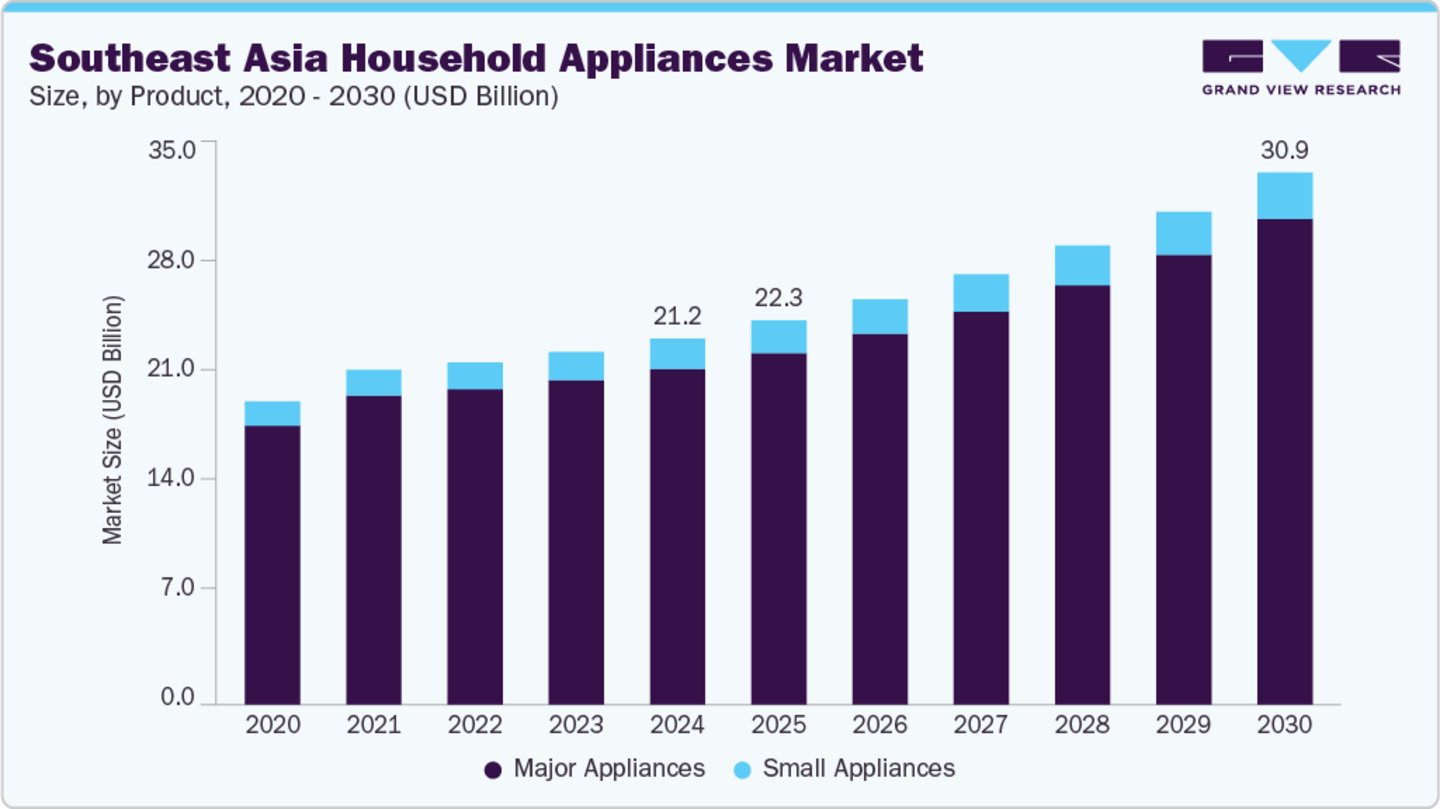
According to data from Grand View Research, the Southeast Asian small appliance market expanded to $22.3 billion by 2025, growing at a compound annual rate of 6.7%. Four structural tailwinds explain why this region has become highly fertile ground for Chinese exporters.
Image/Grand View Research
First, the region offers an ideal demographic alignment. While the total population stands at 660 million, roughly 70% are under the age of 35. This emerging, digitally native demographic has a high propensity for online spending; they demand quality-of-life upgrades but remain highly price-sensitive.
Second, the market rewards localized product-market fit. The tropical, high-humidity climate and compact urban housing footprints create distinct needs. Demand is structurally high for portable fans and dehumidifiers, multi-functional cookers suit multi-generational households, and a strong local culture of social dining drives sales for air fryers and ice makers.
Third, the maturation of regional digital infrastructure has accelerated market entry. Decades of investment by Shopee and Lazada, combined with the explosive growth of TikTok Shop in Indonesia and Vietnam, have streamlined cross-border logistics and overseas warehousing. Brands can bypass traditional offline distribution layers and sell directly to consumers.
Finally, upstream supply chain dominance forms an unassailable moat. China controls 60% to 70% of global small appliance manufacturing capacity. The industrial clusters of the Pearl and Yangtze River Deltas allow for rapid prototyping, aggressive cost control, and agile feature iteration that local Southeast Asian competitors cannot match.
To monetize these advantages, brands have adopted highly localized marketing strategies. Gaabor, recognizing that Southeast Asian e-commerce relies heavily on localized celebrity endorsements and livestream conversions, built an influencer network combining top-tier celebrity validation with mid-tier creator placement. This direct-to-consumer approach pushed its social media impressions past the 100 million mark across Facebook, Instagram, and TikTok, outpacing legacy competitors.
The Three Hurdles: Moving from Transaction to Integration
Despite the rapid initial growth, Southeast Asia is a highly complex market; historical data shows that over 70% of cross-border appliance brands fail within their first year. Moving from transactional cross-border sales to a sustainable local presence requires overcoming three systemic barriers.
1. Severe Market Fragmentation
The eleven nations of Southeast Asia present vast linguistic, cultural, and religious differences. For example, Vietnamese consumers prioritize baseline utility and low cost, while urban Indonesian demographics increasingly seek premium, smart features. The domestic playbook of deploying a uniform product line across all markets is ineffective.
Gaabor』s rapid expansion relied on deep localization: it adjusted its core air fryer architecture for individual countries, offering 6.5-liter high-capacity models for multi-generational homes in Thailand and the Philippines, while selling compact 3-to-4.5-liter variants to fit smaller apartments in Vietnam. Similarly, Han River avoided overexpansion by anchoring its operations in Indonesia before scaling outward to Malaysia, Thailand, and Vietnam, gradually diversifying from floor care into kitchen electronics.

Image/Gaabor
2. The Low-Margin Trap
The low barrier to entry has flooded major regional platforms with unbranded items retailing for under $10 with free shipping. This structural downward pressure has compressed average gross margins below 10%. Because product features are easily copied across China』s highly mature supply chains, competing purely on feature density without brand equity inevitably replicates the margin erosion seen domestically.
3. The Brand and Aftersales Chasm
Consumer brand loyalty in the regional fast-moving electronics sector sits below 15%, with over 70% of transactions driven by impulse purchases. This volatile demand structure leaves many exporters stuck in a short-term warehousing model, lacking localized customer service, spare-parts infrastructure, and post-sale maintenance. Given the fragmented geography of the region, slow return-and-repair pipelines cap customer retention and hurt long-term brand equity.
Image/Han River
To mitigate these risks, market leaders are transitioning from product exporting to manufacturing localization. Industry majors like Midea and Haier have established full-scale production facilities in Thailand and Indonesia. Industrial original design manufacturers (ODMs) like Donlim and Bizoe are following suit—not merely to compress delivery windows, but to build local corporate trust, insulate themselves from shifting tariff structures, and integrate permanently into the domestic market fabric.
Conclusion: The Mechanics of Asymmetric Competition
The rise of Chinese small appliances in Southeast Asia is a classic case of asymmetric competition. Domestically, these brands were vulnerable players squeezed by the sweeping smart-home ecosystems of multi-billion-dollar conglomerates. Abroad, however, they enter the market as dominant entities armed with world-class supply chains, sophisticated digital marketing experience, and hyper-agile product development cycles. The operational baselines required to survive the Chinese domestic market function as high-barrier competitive weapons in Southeast Asia.
Furthermore, because major global conglomerates focus their premium branding efforts on the higher-margin markets of Europe and North America, a market vacuum was left open in developing economies—allowing these agile players to establish early structural positions. However, the current Southeast Asian landscape closely mirrors the Chinese market of two decades ago: fast-growing, highly entrepreneurial, and structurally volatile. Long-term market share will not belong to the brands that expand the fastest, but to the disciplined minority willing to invest in localized supply chains, move from volume to brand equity, and convert immediate digital traffic into permanent consumer trust.