
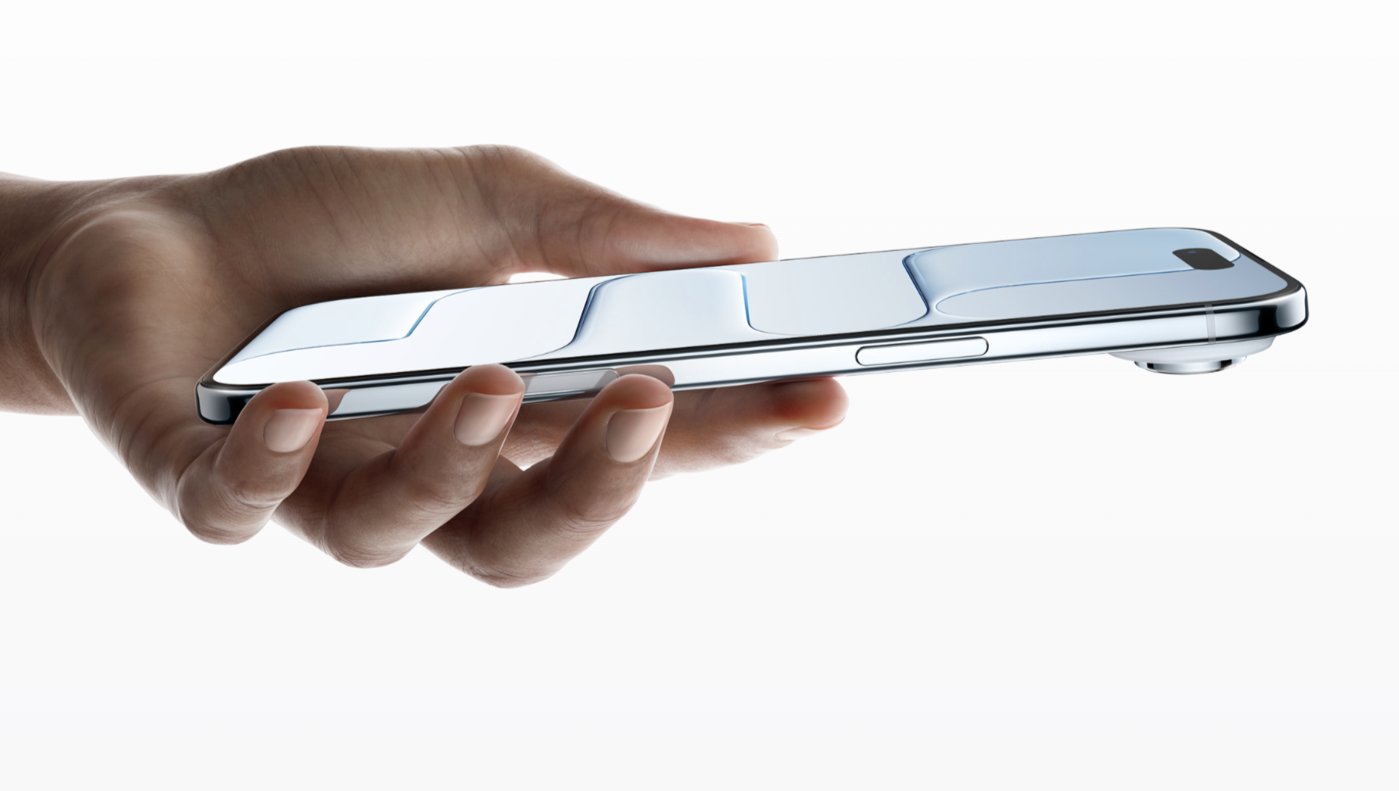
Huawei has officially entered the ultra-thin smartphone race, joining rivals Samsung, Apple, and Lenovo in pushing the limits of mobile design.
The company opened pre-orders this morning for its new Mate 70 Air, which measures just 6.6 millimeters thick, weighs 208 grams, and features Huawei』s signature Maple Red original color imaging system. The phone comes equipped with a 6,500mAh battery and starts at 4,199 yuan ($580).
As global smartphone demand slows, manufacturers are betting on design and hardware innovation to spark fresh consumer interest. With the era of explosive growth in smartphones coming to an end, brands are focusing on differentiation to sustain momentum. According to research firm Canalys, worldwide smartphone shipments are projected to grow just 1.5% in 2025, with several regional markets already nearing saturation or beginning to contract.
The ultra-thin trend has quickly become one of the industry』s defining themes of the year, alongside the rise of AI-driven devices. Samsung led the way earlier with its Galaxy S25 Edge, followed by Apple』s iPhone Air, which marked a major push for eSIM adoption in the Chinese market. Lenovo entered the race in late October with the moto X70 Air, a 5.99mm-thick device weighing just 159 grams.
Now, Huawei』s Mate 70 Air continues the momentum—though with a different philosophy. Unlike its competitors, Huawei has chosen not to sacrifice battery life or performance in the pursuit of extreme thinness.
While the new product category has drawn significant attention, early market feedback suggests ultra-thin smartphones have yet to prove their commercial appeal. Sales of both the iPhone Air and Galaxy S25 Edge have reportedly fallen short of expectations.
According to industry sources, Samsung has canceled plans for its S26 Edge, while Apple is said to have scaled back production of the iPhone Air amid weaker-than-anticipated demand.
Analysts say the challenge for ultra-thin phones lies in balancing aesthetics with practicality. Although they attract attention for their sleek designs, consumers often prioritize battery capacity, camera performance, and durability—areas where extreme thinness can introduce trade-offs. Some online commentators have even joked that these devices risk becoming 「beautiful but useless gadgets,」 appealing more to curiosity than necessity.
Still, Huawei』s entry could help redefine the category. By opting for a thicker frame that allows for stronger battery performance and imaging capabilities, the Mate 70 Air may avoid some of the pitfalls seen in competing models. The launch also reinforces Huawei』s continued push in high-end hardware innovation, even as the global smartphone industry grapples with slower growth and shifting consumer preferences.
Whether the ultra-thin trend can evolve from a design showcase into a sustainable market segment remains uncertain. For now, Huawei』s latest launch underscores one thing: in an increasingly mature smartphone market, differentiation—no matter how slim—still matters.
Following Apple, Ultra-thin Phone Trend Takes Off in China
Many people might not remember that ultra-thin smartphones aren』t unique to this era. Over a decade ago, Chinese phone makers also sparked a wave of ultra-thin phones, with devices around 5mm thick hitting the market—even some users tested them by trying to slice watermelons with their phones.
「A few years ago, Chinese brands like vivo and OPPO launched some of the world』s thinnest phones. The current ultra-thin trend is just repeating the cycle, except now Apple and Samsung are the main drivers,」 Guo Tianxiang, research manager at IDC China, told the author.
This year, Samsung was the first to showcase its ultra-slim smartphones, which have already entered mass production and hit the market. Later, at the autumn product launch event, Apple』s ultra-thin iPhone Air was also released and went on sale. In an era when smartphones are often compared to "bricks" in terms of heft, the impact of ultra-slim phones is quite striking—especially once you hold them in your hand, and it truly feels like encountering a 「new breed」 of device.
Discussing the new iPhone Air, Omdia (formerly Canalys) Vice President of Consumer Business Research, Nicole Peng, told the author, 「Apple has always taken pride in its industrial design. The Air is a product with a strong focus on aesthetics, reminiscent of the Jony Ives era. We estimate first-year shipments will reach 10 million units.」
At the same time, as the iPhone Air launched in China, an Apple fan also shared with the author, 「I』ve watched a lot of reviews, and I really like it—especially the 165g weight and 5.6mm thickness. It feels much better than current flagship models. I might consider getting one as a backup phone if the price drops later on.」
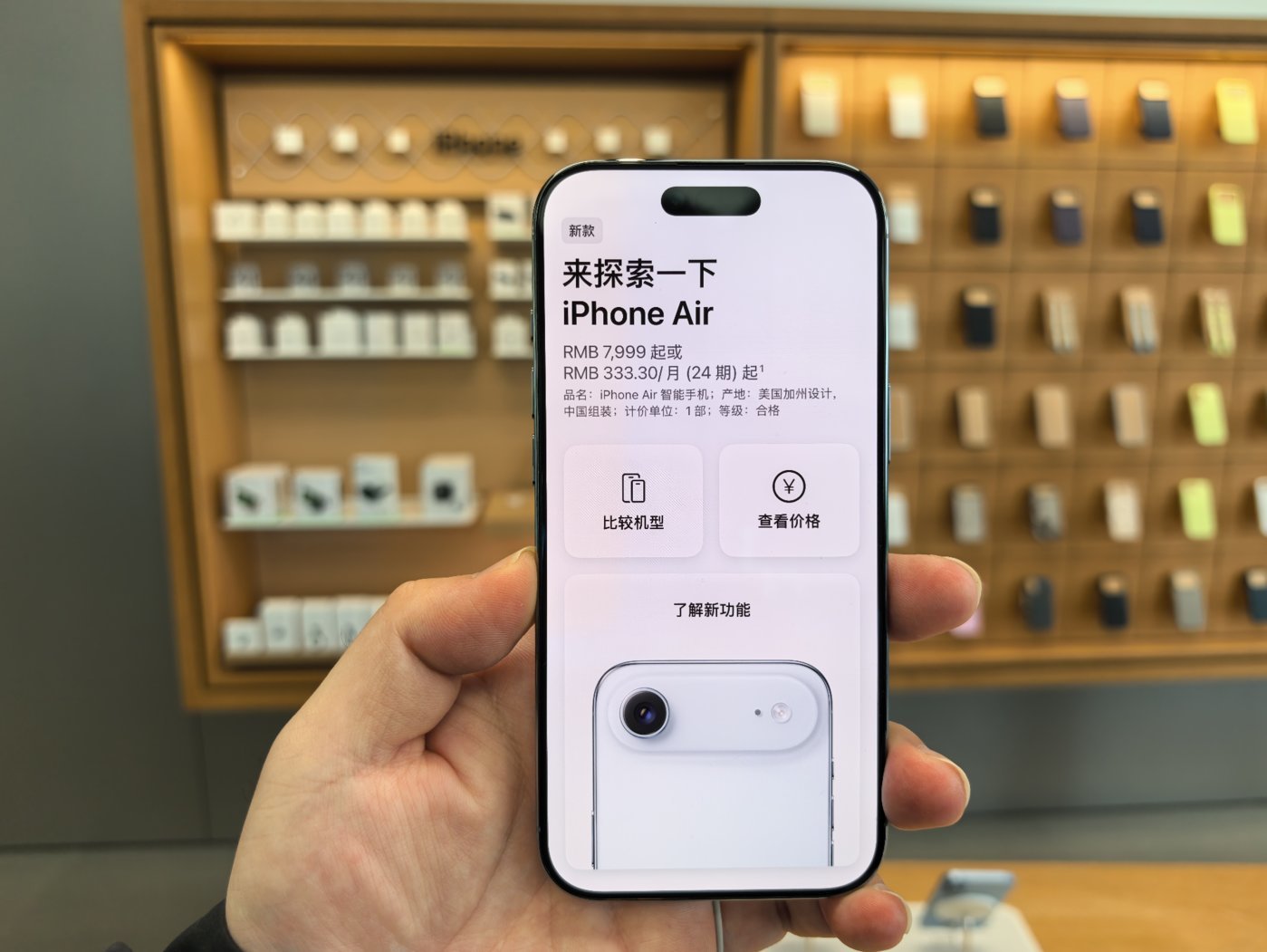
There』s an unspoken rule in the smartphone market: following Apple』s product strategy sets a high bar, and rarely leads to missteps. At the start of the year, an OPPO executive revealed that 「lightweight and slim」 would be the key theme for the smartphone industry this year. According to what the author has learned, after news broke that Apple would launch an ultra-thin phone, many domestic manufacturers began their own planning in this direction.
For example, at MWC, Transsion unveiled the Tecno Spark Slim, an ultra-thin phone just 5.75mm thick, featuring a 6.78-inch display and an ultra-slim 5200mAh battery. Recently, Lenovo and Huawei have both launched related new devices as well. Reportedly, brands such as Honor and vivo will also introduce new models this month—some of which will focus on slim form factors. Judging from leaked images, the Honor 500 series even pays tribute to the iPhone Air in its visual design.
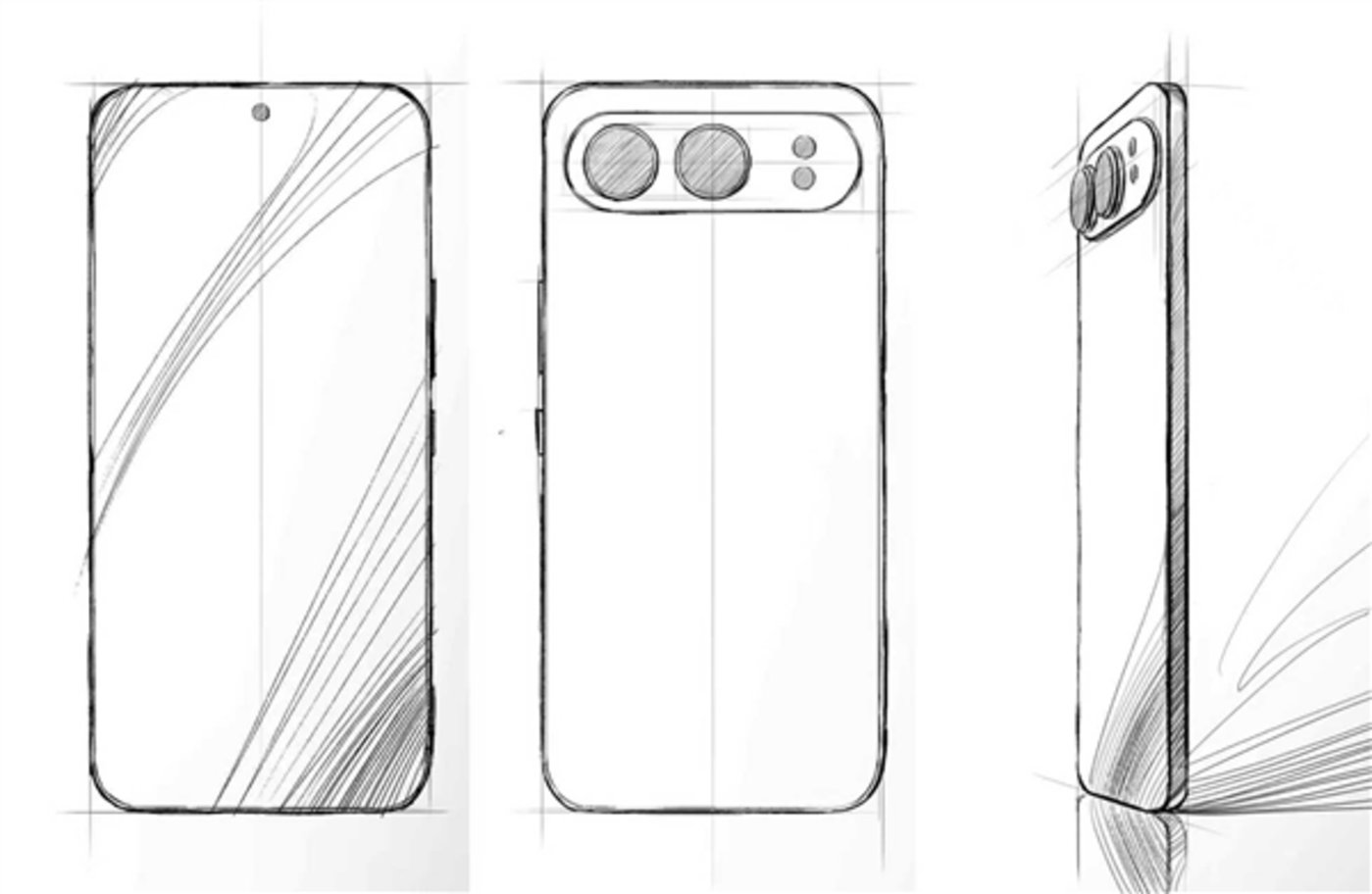
Honor 500 Series Render
A developer from a certain smartphone brand told the author, "Everyone is watching the market』s reaction. The first generation of products is more of an experiment, with many devices simply made thinner on top of existing product plans. Now, as the supply chain matures, there are many established solutions available. In a way, it just adds another selling point."
A Compromised Product That the Market Isn』t Buying—At Least for Now
When it comes to handheld devices, achieving a 「barely noticeable」 user experience has always been the ultimate goal. Of course, this is merely an ideal state, but making devices lighter and thinner has been a long-term direction for smartphone manufacturers. This year, following the trend toward smaller screens, ultra-thin smartphones have become the next design wave.
Why is everyone focusing on ultra-thin designs this year? It』s not hard to understand. Besides following Apple』s lead, the author believes there are two other major reasons. On one hand, ongoing technological advancements—especially in battery technology—have made it possible to create thinner devices even in the era of high-performance smartphones.
On the other hand, during recent years, technological progress in the smartphone market has hit a bottleneck, leading to a situation where there』s hardly any room left to push forward. Take imaging technology as an example: from dual cameras to the current one-inch sensors, and even further to telephoto and night mode, the physical space constraints of smartphones have almost been pushed to their limits.
Now that performance upgrades have reached their peak, brands are turning their attention to design, such as smaller screens and now ultra-thin bodies. Guo Tianxiang, Research Manager at IDC China, told the author, "Of course, manufacturers are also starting to focus on niche market users. With mainstream products no longer able to offer more innovation to mainstream users, companies try to cater to the needs of smaller user groups. The small-screen market, which more manufacturers are now following, is another example."
However, no matter how innovative a product may be, sales remain the ultimate goal. Judging from the products that are already on the market, neither Samsung nor Apple—the industry』s leading players—have made much of a splash in this category so far.
According to reports, the Samsung Galaxy S25 Edge has been discontinued due to poor sales, with only 1.31 million units sold—far lower than other models. The S26 Edge project has also been cancelled, and the flagship series is rumored to return to three models. However, other sources indicate that Samsung has not abandoned its ultra-thin smartphone project. Instead, the company is pushing forward with a new phone initiative codenamed "More Slim," aiming to develop an ultra-thin flagship device with a thickness of less than 5.56mm. The main motivation behind this could simply be to compete with Apple.
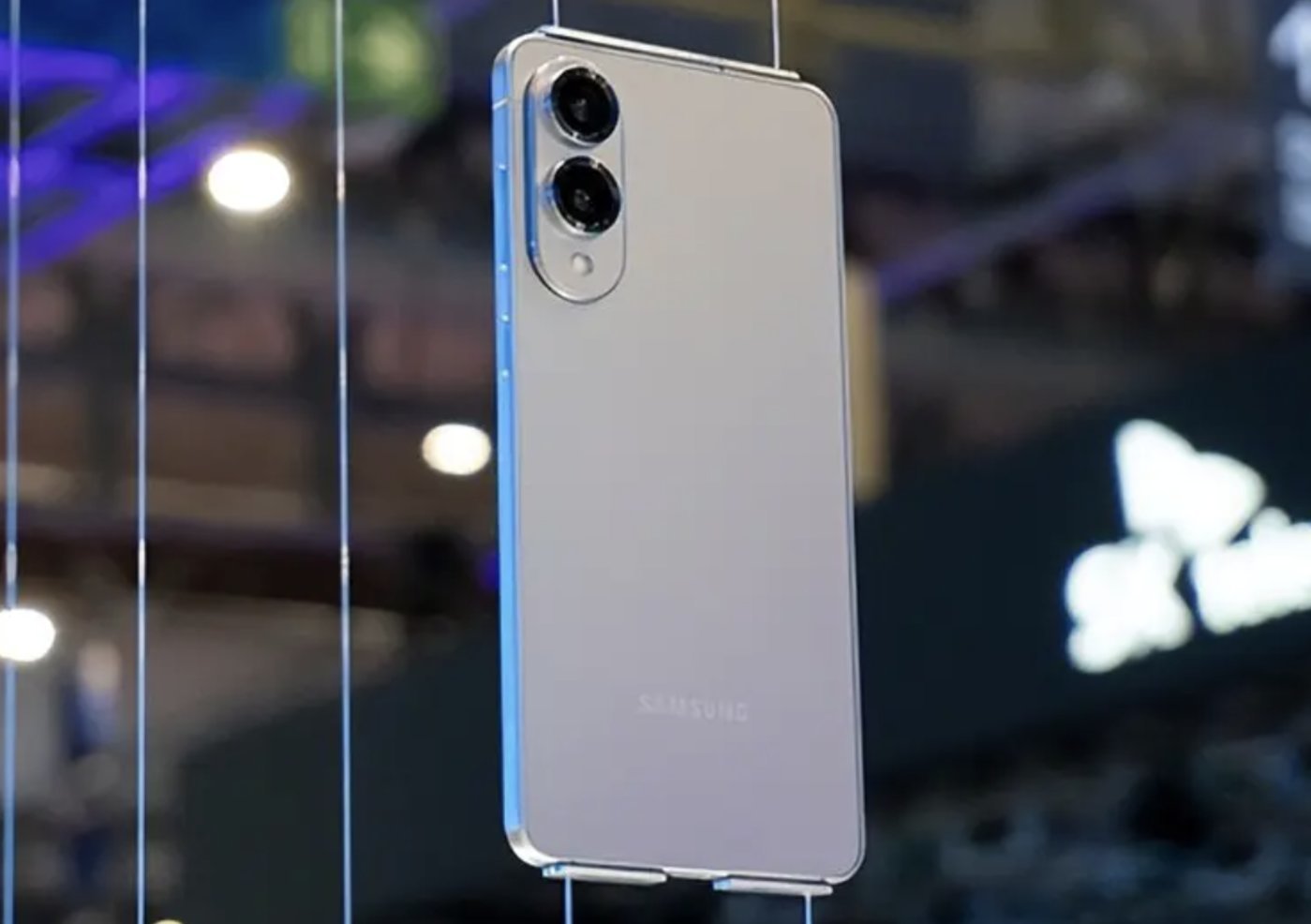
It』s a similar story on Apple』s side. The iPhone Air has not performed as well as expected, and its price even dropped below launch value when it went on sale in China. According to data from Counterpoint, the eSIM-only iPhone Air performed slightly better than the iPhone 16 Plus, but fell short of the iPhone 17 series released at the same time. Senior analyst Ivan Lam commented: "Due to a shorter preorder period and higher pricing, while the standard iPhone 17 offers a more balanced set of features and better overall value, the iPhone Air is expected to remain relatively niche in its early phase."
Beyond product features, the fact that the iPhone Air only supports eSIM is also a major reason why many users in China are hesitant. Unlike overseas markets where eSIMs are more mature, eSIM in China is still in its early developmental stage and there are still inconveniences in applying for and managing eSIM accounts. Compared to international eSIM services, there are also more limitations domestically—for example, users can activate only two eSIMs per month, can replace or renew eSIMs from another region, but cannot sign up for new eSIMs outside their local area, among other restrictions.
Previously, there were reports that Xiaomi was planning an ultra-thin smartphone, but based on the current market performance, it seems the company has also slowed down this plan. Lu Weibing, President of Xiaomi Group, pointed out, 「From a product design perspective, the Air phone represents a very bold and innovative attempt, which deserves recognition. However, making a device extremely thin does indeed come with sacrifices in user experience, including battery life, heat dissipation, performance, camera functionality, and more. Judging from actual sales figures, it does remain a very niche product. What』s more crucial will be the proportion of users who continue using the device after some time.」
A Niche Business for 『Specialists』—Don』t Let Apple Sway You Off Course
Back when the iPhone Air struggled in the market, I pointed out that it seemed more like a compromised 『work of craftsmanship.』 As a super-terminal device used frequently throughout the day, the 7,999-yuan price point felt like it was stuck in an awkward position—not high-end enough, yet not quite affordable. From an innovation standpoint, ultra-thin phones resemble folding screens in that both involve making trade-offs for the sake of design—yet their core difference lies in the nature of change: folding screens represent an entirely new category, with a larger display creating more possibilities for expansion. Ultra-thin phones, on the other hand, are about subtraction—being thin and light simply for its own sake.
It』s important to realize that ultra-thin smartphones inevitably have to make sacrifices for the sake of a slimmer profile. The real challenge lies in how precisely you can 『shave off』 the right features while still keeping users satisfied. Moreover, in the 5G era of high performance, ultra-thin phones are bound to rely on some new technologies, making cost control and product positioning another complex equation to solve.
This is precisely why some domestic brands have made it clear early on that they do not intend to follow this trend. For example, Huang Tao, Vice President of Product at vivo, revealed that the company had thoroughly explored and even created prototypes of ultra-thin Air-style products. They even debated whether to include them in the X or S series, but ultimately let go of the project. The key reason was the difficulty in guaranteeing a complete user experience with this form factor—especially given the serious limitations it would place on imaging capabilities.
Currently, the two brands that have released ultra-thin phones have each made their own optimizations to some extent. For instance, Lenovo retained the physical SIM card slot and provided a 4,800mAh battery capacity—enough for everyday use. Pricing the device in the 2,000-yuan mid-to-low-end range also helps prevent consumers from feeling like they』re 『getting a raw deal.』
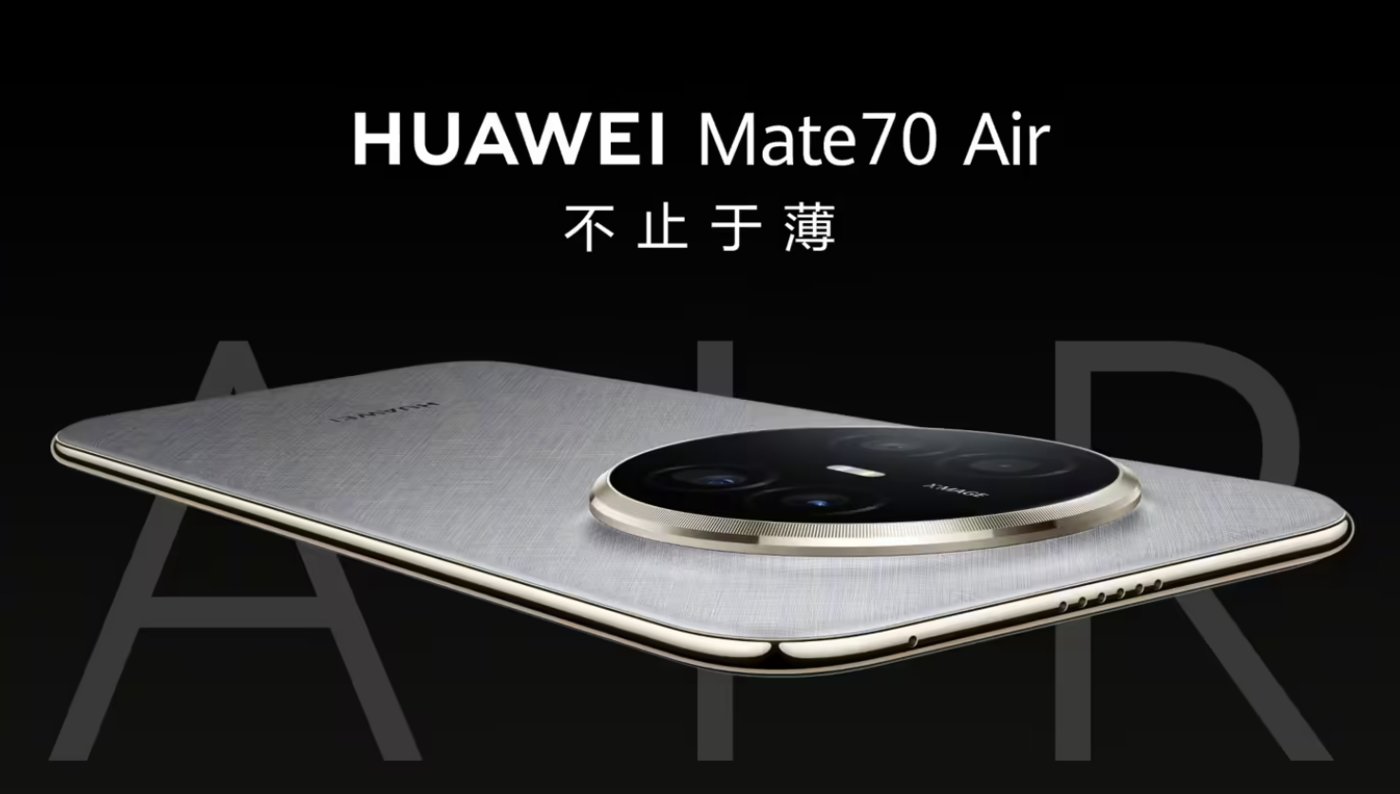
Huawei Mate70 Air
As for the Huawei Mate70 Air, aside from retaining a physical SIM card, it comes in at 6.6mm thick and weighs 208g—not all that much thinner or lighter than a typical flagship model. In the author』s view, Huawei』s strategy is still to ensure strong overall performance, and then pursue a thinner and lighter form factor based on that foundation, rather than taking Apple』s more aggressive approach. At the same time, launching at a lower price is also a way to promote the native HarmonyOS.
Judging from today』s market response after pre-sale began, Huawei』s decision not to fully follow suit was the right one. According to data from the Dewu App, one hour after launch, the market price of the Huawei Mate70 Air 12GB+512GB Gold-Silver edition rose from 4,699 yuan to 4,999 yuan—a premium of 300 yuan. By contrast, when the iPhone Air was launched, the 512GB version saw almost no markup, and actually dropped below retail immediately after becoming available.
For Apple, its regular iterative models provide a solid base for sales, so the Air series is its way of exploring new market segments with little real risk if it fails. In its latest investment report, Wall Street investment bank JPMorgan predicts that both the iPhone Air 2 and iPhone Air 3 are in Apple』s release plans through 2027.
As for other brands considering ultra-thin phones, they should think carefully. Copying Apple』s approach may often work, but it』s not guaranteed every time—it』s important to respect objective market trends rather than be 「led astray by hype.」 Today』s consumers are no longer easily swayed by gimmicks alone.