
Related articles

TMTPOST — China』s tech giants are turning up the heat in Brazil』s booming food delivery market, with Meituan and Didi engaged in a series of legal disputes, aggressive market moves, and large-scale investment commitments.
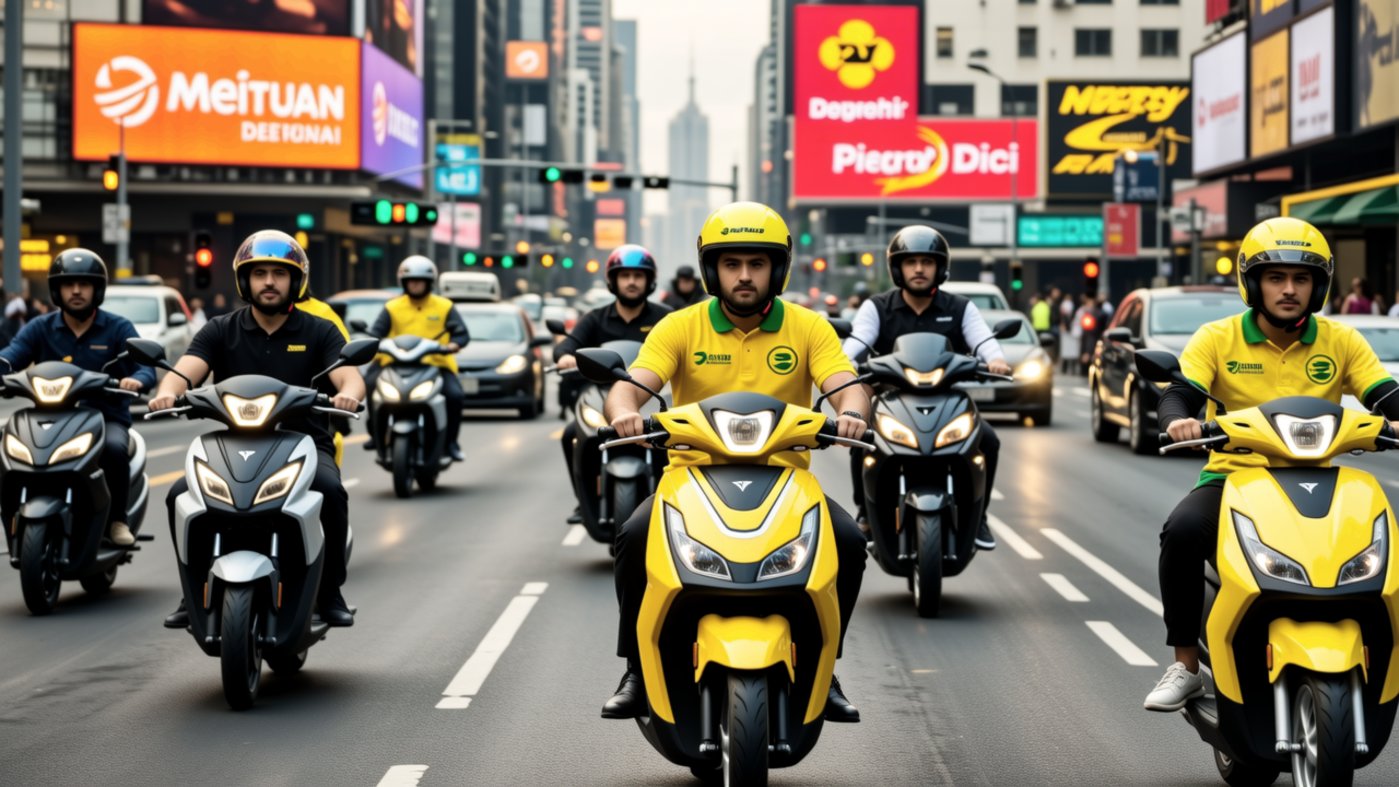
AI-generated image
The competition has quickly spilled into the courtroom. On August 14, Meituan』s international food delivery brand Keeta filed a lawsuit against Didi』s 99Food in São Paulo, accusing the platform of violating Brazil』s competition laws. Keeta claims that 99Food used approximately 900 million reais (about 1.2 billion yuan) in upfront cash incentives to induce restaurants to sign exclusive 「pick one out of two」 contracts.
These agreements prohibited restaurants from collaborating with Keeta during the contract period but notably did not restrict partnerships with iFood, Brazil』s homegrown delivery leader, which controls an estimated 80% of the market.
「Such terms were clearly designed to block Keeta』s entry into the Brazilian market, limit competition, and reduce innovation,」 Keeta said in a statement.
The 「pick one out of two」 practice marks the latest chapter in a tense legal confrontation between the two Chinese entrants. Didi』s 99Food initially returned to the Brazilian market last month, investing 1 billion reais to expand its presence. Reports indicate that smaller restaurants received several hundred thousand reais in upfront incentives, while large chains received payments as high as 13 million reais.
This legal clash follows an earlier case over advertising keywords. In August, a São Paulo court issued an injunction against 99Food, ordering it to stop purchasing Google keywords for 「Keeta」 and manipulating search results. The court cited the behavior as misleading consumers and diverting traffic from Meituan』s app. Noncompliance would result in a daily fine of 20,000 reais (roughly $3,640).
Just days later, the competition escalated further. On August 19, 99Food filed a lawsuit against Keeta, claiming the app』s trademark color—yellow—was too similar to 99Food』s branding. The case has seen multiple reversals, with 99Food filing and then retracting complaints. A recent court decision rejected 99Food』s attempt to withdraw, giving the company the option to unilaterally renounce the lawsuit, effectively acknowledging defeat.
Beyond the courtroom, Brazil has become a major target for Chinese investment. According to a study by the Brazil-China Business Council (CEBC), Chinese direct investment in Brazil exceeded $4.2 billion in 2024, more than double the 2023 figure. The growth reflects a diversification from traditional energy projects to newer sectors such as electric vehicles, technology, and food delivery.
「China』s arrival is excellent; it will trigger a competitive shock to other companies in Brazil』s industrial sector,」 said Uallace Moreira, Brazil』s Secretary of Industrial Development, Innovation, Trade, and Services. 「We need these investments to develop supply chains here in Brazil.」
However, some Chinese operations in Brazil still import parts from China for final assembly, particularly in the electric vehicle sector, limiting job creation and supply chain development.
The increase in Chinese investment also mirrors geopolitical shifts. With U.S.-China trade tensions discouraging investments in the United States, Chinese firms are turning to developing markets like Brazil. CEBC study lead author Tulio Cariello noted that Chinese investments in the U.S. totaled only $2.2 billion last year, down sharply from previous years, while Brazil now ranks third globally for Chinese investments behind Britain and Hungary.
In Brazil, Didi relaunched 99Food on April 5, integrating the platform with its local ride-hailing and digital payment services. Meituan followed on May 12, announcing plans to invest $1 billion over five years to support Keeta』s growth. The timing and scale of these moves have put intense pressure on iFood, which responded by announcing a 17 billion reais ($3.1 billion) investment plan to maintain its dominance.
99Food』s 「pick one out of two」 contracts, combined with upfront incentives to strategic restaurants, represent a high-stakes bid to block Meituan』s entry. Industry sources suggest that over 100 restaurant chains have already been approached, with a total of roughly 900 million reais allocated to exclusive agreements.
「The cash incentives are essentially a defensive measure to secure market share,」 said a local market analyst. 「But they also raise serious questions under Brazil』s competition law, particularly when exclusivity favors one new entrant over another.」
Experts have warned that this type of aggressive, zero-sum competition among Chinese firms abroad carries broader risks. According to analysis by industry observers, such practices not only threaten short-term business logic but could damage China』s international brand reputation.
Morgan Stanley』s 2024 Global Online Takeaway report indicated that mainstream food delivery platforms globally operate on razor-thin margins—an average net profit of just 2.2%. In this context, 99Food』s 900 million reais spending to block a fellow Chinese competitor in just two months is highly irrational. 「In such a low-margin business, the investment cannot realistically be recovered through normal operations,」 the report noted. 「It is a destructive consumption war that violates both commercial logic and ethics.」
Long-term, the consequences extend beyond profits. 「Once the 『involution』 label sticks, all Chinese companies operating overseas may face stricter scrutiny, lower trust, and a more challenging business environment,」 analysts warn. Brazilian media have repeatedly highlighted Chinese firms』 use of exclusive agreements, noting that Didi』s approach undermines the perception of Chinese enterprises as innovative collaborators. Such behavior may trigger a collective reputational crisis for Chinese brands abroad.
Industry experts emphasize that Chinese companies need to enforce ethical practices and self-regulation when expanding globally. Otherwise, the broader perception will be that Chinese businesses rely on low-cost, aggressive, and exclusionary tactics rather than innovation and cooperative approaches.
Brazil』s food delivery market is heavily concentrated. According to a joint survey by the Brazilian Association of Bars and Restaurants (Abrasel) and the Brazilian Support Service for Micro and Small Enterprises (Sebrae), iFood controls roughly 80% of the market, followed by Rappi with 9%, and all other players combined accounting for less than 3%.
Recent years have seen growing regulatory attention to curb anti-competitive behavior. In 2023, Brazil』s Economic Defense Administrative Council (Cade) prohibited iFood from signing exclusive contracts with chains operating more than 30 restaurants. These rules aim to prevent anti-competitive practices and ensure fair market access, particularly for new entrants like Didi and Meituan.
Both Didi and Meituan are betting heavily on Brazil. Didi』s 1 billion reais investment in 99Food marks a rapid re-entry strategy, while Meituan』s Keeta is positioning itself for a multi-year growth trajectory supported by significant capital infusion. Colombian competitor Rappi is also investing heavily, committing 1.4 billion reais over the next three years.
The Brazilian market』s promise lies not only in consumer demand but also in potential synergies with logistics, digital payments, and cloud-based services. Analysts suggest that the presence of two well-funded Chinese entrants could accelerate innovation, drive efficiency, and benefit consumers with better service and promotions.
Despite the influx of capital, Chinese companies face structural challenges in Brazil. High supply chain costs, complex taxation, labor regulations, and occasionally opaque local business practices make operational execution difficult. For example, earlier this year, prosecutors sued Chinese automaker BYD after rescuing 163 workers allegedly subjected to slavery-like conditions at a local factory—an allegation the company denied.
「Doing business in Brazil is very different from China,」 said Moreira. 「The legal and regulatory environment is stricter, and companies need to adapt accordingly.」
The escalating disputes between Meituan and Didi highlight the high stakes of market entry strategies in emerging economies. Legal battles over exclusive contracts, keyword advertising, and branding may set precedents for future foreign entrants. Meanwhile, the sheer scale of Chinese investment—covering food delivery, electric vehicles, and technology projects—underscores Brazil』s increasing importance as a hub for global capital deployment.
For Brazilian consumers, the competition could translate into better pricing, faster delivery, and more innovation. For the companies themselves, it is a test of strategic planning, regulatory compliance, and operational agility.
As 2025 unfolds, observers expect further confrontations between the two Chinese giants, both in courts and in the marketplace. With billions of reais at stake and regulatory scrutiny intensifying, the Brazil food delivery sector is entering a high-stakes, high-pressure phase.
Analysts believe that whichever company manages to balance aggressive expansion with compliance and market adaptation could emerge as the dominant player. Meanwhile, local incumbents like iFood and new entrants like Rappi will continue to defend their market share, creating a dynamic and competitive landscape that will define the next chapter of Brazil』s digital economy.
The ongoing legal and commercial battles between Didi and Meituan in Brazil illustrate the complexities of international expansion, particularly in a highly concentrated and regulated market. While the influx of Chinese investment promises growth, innovation, and consumer benefits, it also presents challenges in governance, market ethics, and competitive practices.
Chinese enterprises venturing abroad must carefully consider both operational strategy and reputation. Excessive internal competition—such as the high-stakes 「pick one out of two」 strategy—risks undermining the collective image of Chinese brands and could trigger stricter scrutiny, reduced trust, and a more hostile business environment for all future entrants. Ethical, cooperative, and rational expansion is not just a moral imperative—it is essential for sustainable international growth.